

Most people will judge your business by your website before they ever speak to you. That judgement takes a few seconds and it is mostly about whether the site looks current and whether they can find what they came for.
This covers why design affects your results, how to tell when a site needs replacing rather than patching, and the four things a modern site has to get right.
Why design changes your numbers
Think about walking into a shop where the layout makes no sense and half the stock is in the wrong place. You leave, and you probably do not come back. A website works the same way, except leaving costs nothing and takes one tap.
Every visitor who bounces is a lost enquiry. It also feeds back into your search position, because search engines can see that people arrive and immediately leave. Design and ranking are not separate problems.
The reverse is true as well. A site that is easy to read and easy to navigate keeps people on the page longer, which gives you more chances to make the case for your business.
When to redesign rather than patch
Design conventions move, and a site that looked current five years ago rarely does now. But dated styling on its own is a weak reason to rebuild. These are stronger ones:
- The site is not usable on a phone, or it is technically responsive but awkward
- You cannot update it yourself without calling somebody
- It is slow, and speeding it up means fighting the way it was built
- The business has changed and the site describes what you used to do
- Your bounce rate is climbing and the analytics point at specific pages

A rebuild is also the cheapest moment to fix your site structure, your URLs and your page speed together, because you are touching all of it anyway. Doing those three things separately later costs considerably more.
One caution: if the current site ranks well, keep the URLs. Changing addresses without redirects is the most common way a redesign loses traffic that took years to earn.
What a modern site has to get right
Not design fashions — the four things that decide whether the site works.
1. Navigation people do not have to think about
Menus where the labels say what the pages contain, contact details that are visible without hunting, and a search function if the site is large enough to need one. If a visitor has to work out how your site is organised before they can use it, the design has failed regardless of how it looks.
2. Built for phones first

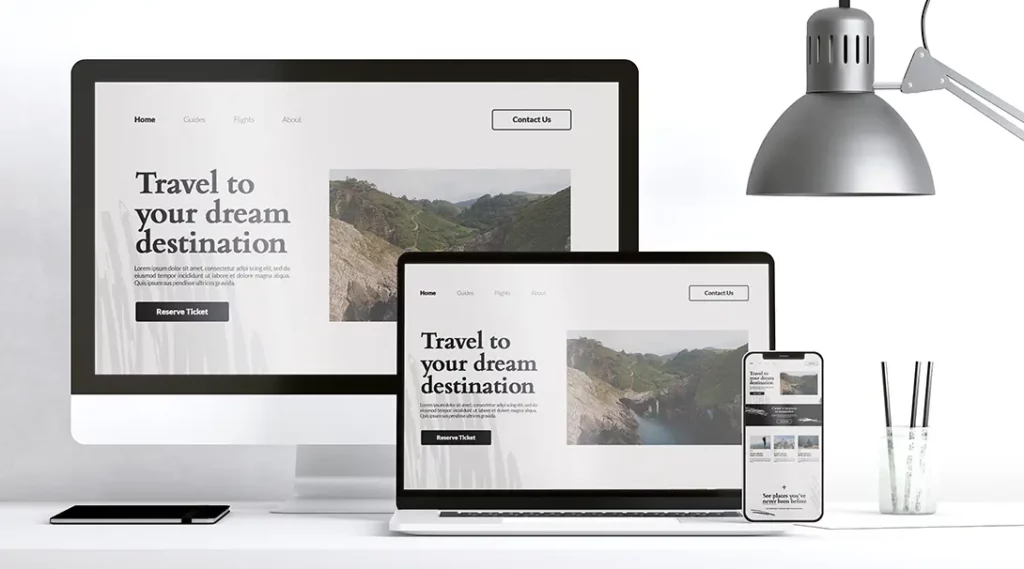
Most visits to a local business site come from a phone. That makes the phone layout the main one, not an adaptation of the desktop version. In practice it means tap targets big enough to hit, text you can read without zooming, and forms that are realistic to complete one-handed.
3. Speed

People leave slow sites before they see anything. Most of the weight on a typical site is images that were never resized, plus scripts that are loaded on every page but used on one. Both are fixable, and both affect search position as well as patience.
4. Structure search engines can read
Clean URLs, one clear heading per page with a sensible hierarchy beneath it, descriptive alt text, accurate titles and meta descriptions, and structured data where it applies. None of this is exotic. It is mostly a matter of whether it was done while the site was being built or bolted on afterwards.
How we approach it
A website is not a project that finishes. It changes as the business changes, and the useful question is not whether it looks good today but whether it will still be workable in three years.
We build sites that are fast, that work properly on a phone, and that you can actually keep up to date. If you are planning a new site or weighing up whether your current one is worth rescuing, tell us what you have and what you need from it, and we will give you a straight answer — including when patching is the better call.